By now I’ve gotten to a place where I can finally read Shigesato Itoi without assuming it’s always going to be about MOTHER, so this caught me very off-guard: In an article posted on Hobonichi today, Itoi sat down with Yoshio Sakamoto to talk about his work as producer for Miitomo. At one point early on the subject turned to Itoi’s first visit to Nintendo, where he revealed MOTHER’s (EarthBound Beginnings) initial working name.

Itoi: Is this the first time we’ve met?
Sakamoto: Actually we met a long time ago. (laughs)
Itoi: Oh! Pardon me. When did we meet?
Sakamoto: So, there’s that game “Nakayama Miho no Tokimeki High School.”
Itoi: Yeah! (laughs)
Sakamoto: It’s a really old game now [released on the Famicom in 1987], but when we first started production, our president at the time, Hiroshi Yamauchi, insisted that I ask your advice if I was going to work on it. So we had you come visit the Nintendo office. I was a project manager then.
Itoi: Oh, really!
Sakamoto: Yeah. (laughs) So I asked you for all kinds of advice, and when we were done, you said, “Well, actually…”
Itoi: MOTHER.
Sakamoto: Yes. You showed me the plans for your first game, MOTHER.
Itoi: That’s right. It wasn’t even called MOTHER at that point. My temporary title was ESP1.
Sakamoto: Right.
Itoi: That was my very first time going to Nintendo. By the way, did you happen to know why Yamauchi told you to call me over?
Sakamoto: No, I don’t.
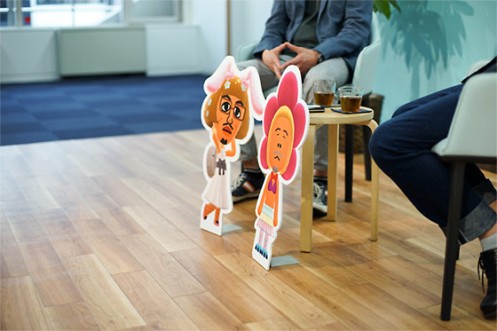
Itoi: I only heard about it later, but there was a feature about video games on the late-night show “11PM.” It was a time when video games were under a great deal of scrutiny and viewed much more negatively than they are now. I happened to be on that episode, and I was defending video games. I talked about the way college students used to be criticized for reading manga, and how over time manga was given a right to be a part of society. “Games are criticized the same way now,” I said, “but it’s really no different.”
Yamauchi just happened to have seen the episode, and he said [mimicking Yamauchi] “Damn right!”
Sakamoto: You sound just like him. (laughs)
Itoi: So that’s how I came to visit Nintendo, but I see, now—that’s when you and I first met. That really brings me back.
Sakamoto: (Laughs)
Itoi: Nakayama Miho no Tokimeki High School was a sort of communication-based game at the time, wasn’t it?
Sakamoto: I suppose that’s one way of putting it. (laughs) [A real phone number appeared in the game, and you could call it to receive hints.)
Itoi: And did we ever meet after that?
Sakamoto: At the MOTHER 2 launch party. I was pretty close to Hirokazu Tanaka and spent a lot of time with him. I was standing with him when you called out, “Hiroka-chaaan!” Your wife was there, too, and I was able to meet her.
Itoi: Ah yes, I remember that day well. (laughs) While we were still working on MOTHER 2, Iwata asked me if he could make a selfish request. I asked what it was. He asked me if I would invite my wife to come to the launch party.
Sakamoto: Ahh. (laughs)
Itoi: She usually doesn’t like to go out for things like that, but it was the first time Iwata ever asked for a favor, so I had her come with.
Both: (laughs)
Sakamoto: So that’s why I was able to meet her! I was a little bit full of myself back then and had kind of dreadlock-looking hair, and she said, very politely, that I had a “strange hairstyle.” That compliment is a treasure I carry with me to this day. (laughs)
—–
I’m really curious to know how this fits into the timeline of Itoi’s first meeting with Miyamoto, who he actually presented the proposal to.
Source: Hobo Nikkan Itoi Shimbun x Nintendo: Miitomo Potential!

After the devastating news of Nintendo president Satoru Iwata’s passing, Shigesato Itoi has updated his daily blog, Today’s Darling, with a post reflecting on his intimate friendship with Iwata. Iwata often stopped by Itoi’s Tokyo office when he was in town, and has appeared many times in interviews on the Hobonichi website, which he helped launch back in 1998. Hobonichi staff have compiled a list of some of the feature interviews they’ve had in the past. The interviews are only in Japanese, but you can find the list here.
The list does, however, include a 11-page interview with Iwata from 2007 that was translated into English, entitled “Mr. Iwata came to our office, and we had a nice talk over supper.”
My unofficial translation of Itoi’s message from today’s blog is below.
When I’m parting with a friend, regardless of the circumstances, I find it best to just say, “See you later.” We’ll meet again. After all, we’re friends.
That’s right—nothing unusual about it. I’ll see you later.
You went on a trip far, far away, even though it was planned for many years from now. You wore your best outfit and said “Sorry for the short notice,” though you didn’t say it out loud.
You always put yourself last, after you’d finished helping everyone else. You were so generous as a friend that this trip might be your very first selfish act.
I still can’t grasp what’s happened. It feels like I could still get a light-hearted e-mail asking me out to lunch at any moment—after you’ve made sure lunch wouldn’t disrupt my schedule, of course.
You can invite me out whenever you want. I’ll invite you, too.
So for now, let’s plan on meeting again. You can call me up whenever you like, and I’ll give you a call, too. I still have a lot to talk to you about, and if I come up with any particularly good ideas, I’ll let you know.
So let’s meet again.
No–I suppose we’re already meeting. Right here, right now.

Shigesato Itoi’s company, Hobonichi, is mostly known overseas for its quirky but versatile daily planner, the Hobonichi Techo. Another major product is one less familiar overseas: the haramaki, or belly warmer.
A s this old but informative PingMag article points out, the haramaki was once strictly functional underwear that had a grandpa-image similar to yellowing long johns. In 2001, Hobonichi reinvented them as fashion items to layer with your clothes.
You know those everyday momentary chills you get when you bend over and your shirt rides up a little? Gone. I see London, I see France, I see someone’s wearing a super handsome belly warmer over their pants. Studies have proven that wearing this thick, extra layer around your stomach keeps the rest of your body warm in the winter. It’s also great in the summer when trapped inside all day under a blasting air conditioner.

Before and after wearing a haramaki.
The 2014 Summer collection includes three very special designs created in collaboration with Nintendo. One design stars Mario, and two designs feature Mr. Saturn from EarthBound.
While the sizes were designed around the relatively smaller body of Japanese people, the terrycloth material is incredibly stretchy and large enough to fit most westerners. You can wear it directly over your skin, over an undershirt and under your shirt, or completely over your shirt.
You can find size charts and ordering instructions here.

The 2014 Summer lineup in a Loft department store in Tokyo.
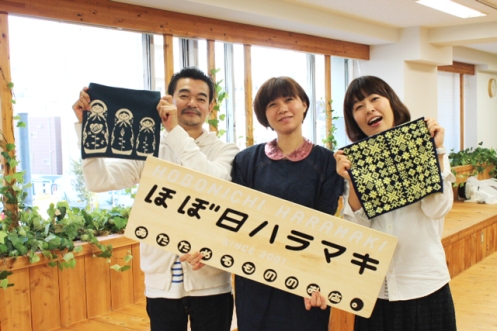
Looking to buy a haramaki belly warmer from Japan? Here’s an English translation of Hobonichi’s size chart, and ordering instructions until there is an English store available in the future. For now, feel free to use this walkthrough to nab a limited-edition official Nintendo design while you still can!
Size Chart
While each haramaki has slightly different material ratios, they’re all made of comfortable short-loop terry cloth with a lot of stretch. So if you’re just a little larger than a certain size, give it a shot!
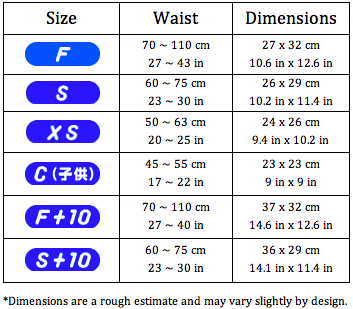
F = Large / S = Small / XS = Extra Small / C = Child
F +10 = Tall Large / S+10 = Tall Small



Price
Note: 100 yen is about $1.00 USD. Sales tax is removed at checkout for orders shipped outside Japan.
- Adult size: 3400 yen (~$34)
- Child size: 2900 yen (~$29)
- Adult tall size: 3800 yen (~$38)
*The Nintendo series does not come in a tall size - Shipping & handling to North America: starting at 1700 yen (~$17)
Ordering Instructions
- Access the Hobonichi Haramaki store.
- Find your product and click on the size you would like to buy.
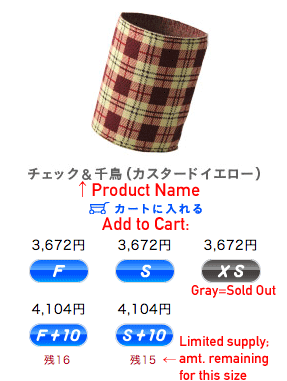
- Choose “←Continue Shopping” or “Proceed to Checkout→”.
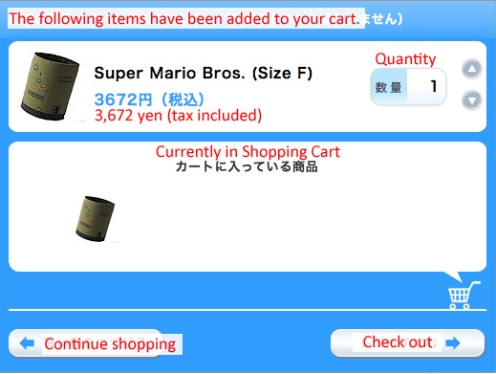
- Click on “English” option in cart.
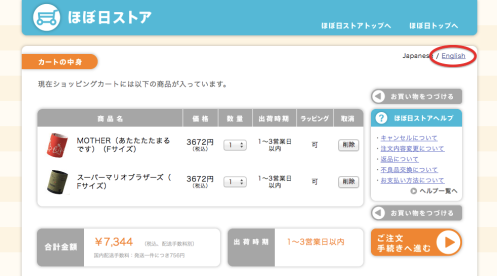
- Follow these instructions to create a store account and check out.

Orders are shipped within 1~3 business days and mailed express, so you can generally expect them in about a week.
Questions? Ask in the comments!

From Today’s Darling, Itoi’s daily blog:
I’ve been working for most of my life, now, so people remember different work of mine from different periods in my career. There’s something that makes me happy about that, so I can smirk about some of it and say, “Yeah, that was me.”
In particular, after making the MOTHER series, the players have grown up into adults, and they talk about the effect the game had on them and the memories it’s created. It makes me feel like a teacher reuniting with his pupils. Nowadays, I look back on all the hardships I faced creating those games, and I often think and say how glad I am to have done it.
The television series about our hunt for buried gold always gets people curious. They ask if anything came of it, and tell me I should do it again sometime. But I just say that nothing came of it, and I can’t.
Once in a while, I’ll meet someone who tells me they sent in entries to my magazine columns Hentai Yoiko Shimbun and Manryu Slogan Juku.
My main profession of copywriter is one that I performed without attaching my name to my work, but people still often give me as an example of a professional. And the television show “YOU” that I hosted for a short period of time, to this day people tell me they would always watch it. People even bring up my work writing lyrics for TOKIO.
But me, personally, I’ve forgotten it all. I’m always relying on other people to remind me of everything because I kept no records of anything, and my memory’s not very good. I haven’t done the math, but I think Hobo Nikkan Itoi Shimbun is the longest and most fulfilled job I’ve ever held. It’s the first time in my life that I’ve been able to continually push ahead without ever losing sight of my motive, and I think it will be the last. Perhaps that’s why I want to reach so many more people now than I ever have.
Thanks for visiting Hobonichi. Seeing all the things that come to an end makes me want to do my best.
The following article is a three-way discussion between Shigesato Itoi, Shigeru Miyamoto, and Satoru Iwata concerning the circumstances of the Earthbound 64 cancellation. The discussion goes on for quite a long time as they pore over every detail they could possibly think of to explain exactly what happened when they pulled the plug on the ill-fated Nintendo 64 game they’d been working on for a total of six years.
This discussion was posted alongside the official cancellation announcement on August 22nd, 2000, so it’s 13 years late to make it out of Japan, which isn’t surprising considering the volume. I recommend sitting down to read it when you’ve got time to burn.
(Original article can be found here.)
MOTHER 3
To Everyone Who Waited
A Discussion between Shigesato Itoi, Satoru Iwata and Shigeru Miyamoto about the cancellation of MOTHER 3.
Discussion Participants
●Shigesato Itoi
MOTHER 3 creator/scenario writer
●Satoru Iwata
MOTHER 3 producer
Former president of HAL Laboratory, current head of Nintendo’s corporate planning division and consultant at HAL Laboratory
●Shigeru Miyamoto
MOTHER 3 producer
Head of Nintendo Entertainment Analysis and Development
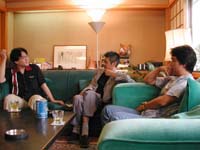
Itoi: We’re publishing this discussion before the opening of Nintendo Space World which runs August 24-26, 2000. Upcoming games are announced on the 24th, but some people may be surprised to see MOTHER 3 absent from the lineup. So before that happens, I’d like to have a discussion between the three of us so everyone can understand why MOTHER 3 disappeared. I’m very sorry to say this, but we’ve recently decided to discontinue the game’s development. Is “discontinue” the right word?
The 64DREAM – December 1997 Interview: Shigesato Itoi and Shigeru Miyamoto Discuss the Nintendo 64DD
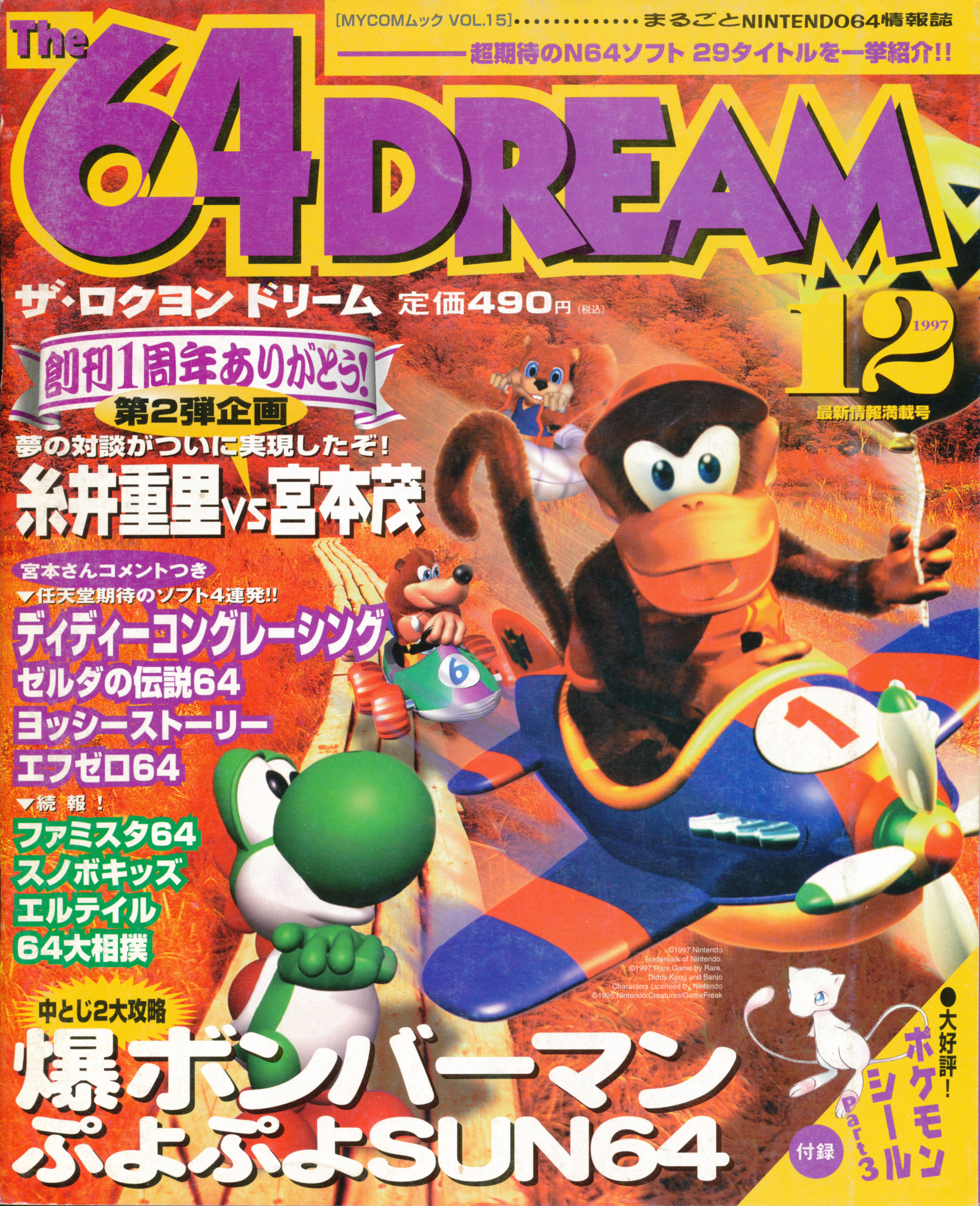
This issue celebrates the magazine’s one year anniversary with a discussion between two of the video game powerhouses at the time: Shigesato Itoi and Shigeru Miyamoto. They discuss their professional relationship, the unpopular Japanese TV advertisements for the Nintendo 64, the 64DD (two years before its release), and lots and lots of random personal questions!
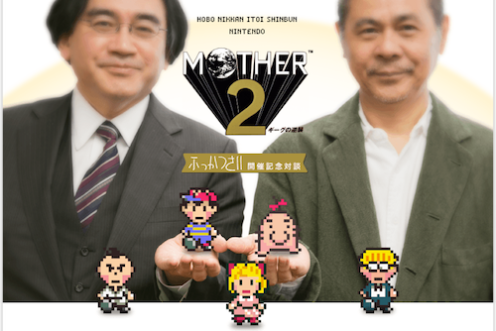
Shigesato Itoi recently sat down with Satoru Iwata to share a discussion in commemoration of the MOTHER 2 release on the Japanese WiiU Virtual Console. Iwata did most of the talking, and former Weekly Famitsu editor and current Hobonichi employee (and token MOTHER 2 guy in the office) Yasuhiro Nagata headed the interview.
KameDaniRyuu has translated the three-part interview and posted it online. You can find the translated interview here and the original Japanese page here.
Shigesato Itoi’s Hobonichi office has a tradition of celebrating the release of every Animal Crossing game by turning office-wide gameplay into an actual work project. (Jealous yet?) Almost every person in the office participates and keeps a blog of their town and experiences. You can read each person’s blog by clicking on their picture. (For those of you who for whatever strange reason can’t pick out Itoi’s face, his AC blog is here.)
In conjunction with this tradition, Iwata and two members of Nintendo’s EAD visited Itoi’s office last month to hold a group discussion about Animal Crossing: New Leaf for the 3DS a few days before the game’s release.
Near the end of the discussion, Iwata brings up MOTHER 2 and reveals some interesting insight about his work on the game:
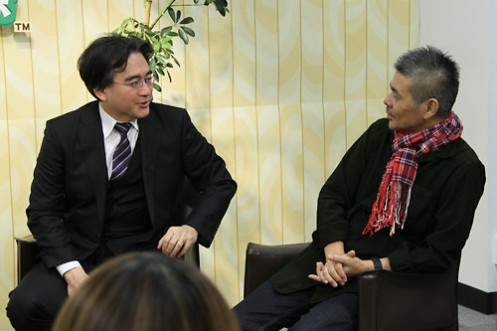
Itoi: It’d be great for people who have never played the series to play this game. It’s—well, it’s a game that doesn’t have many struggles to it. It’s just filled with wonderful things.
Iwata: “Adults, children, and even your older sister.”
Itoi: Yeah. (laughs)
Iwata: This is kind of a personal thing, but when we made MOTHER 2 and you wrote the phrase “Adults, children, and even your older sister”… if you hadn’t been focusing on that idea, I don’t think I would have ever announced Nintendo’s intentions to expand the gaming population [when I took over as president]. So that slogan of yours turned out to be critical advice for me.
Itoi: And that sense of “Adults, children, and even your older sister” is quite clear in Animal Crossing.
It’s really heartwarming to see the MOTHER series have enough of an effect on people to influence the direction of Nintendo as a company.
You can find the original Japanese article here.
I went to a Christmas event recently where there was a gingerbread town on display. One of the gingerbread houses immediately stood out to me–it was a really well-made Japanese dojo, complete with koi pond, rock garden, and ninjas practicing with Pocky!
Whenever I read kanji, the English meaning comes to mind faster than the Japanese reading does, so when I read the kanji they’d drawn onto the piece, something seemed off.
Then I realized, once the Japanese reading hit me, that they’d come across a homonym and, unfortunately, used the wrong “dojo.”
Today’s Japanese vocabulary lesson: sympathy. Reading: dōjō. Kanji: 同情

Click for learning.
Also featured at the event was a Lucky Cat themed tree. It was awesome! (And the golden cat’s arm moved!) I love seeing Japanese stuff in America, it makes me feel like there’s a lot of love between our countries and that makes me all warm and fuzzy inside ♪


 Yomuka!